
Beyond Tax Slabs: A Practical Guide to Understanding Income Tax in India (FY 2025–26)
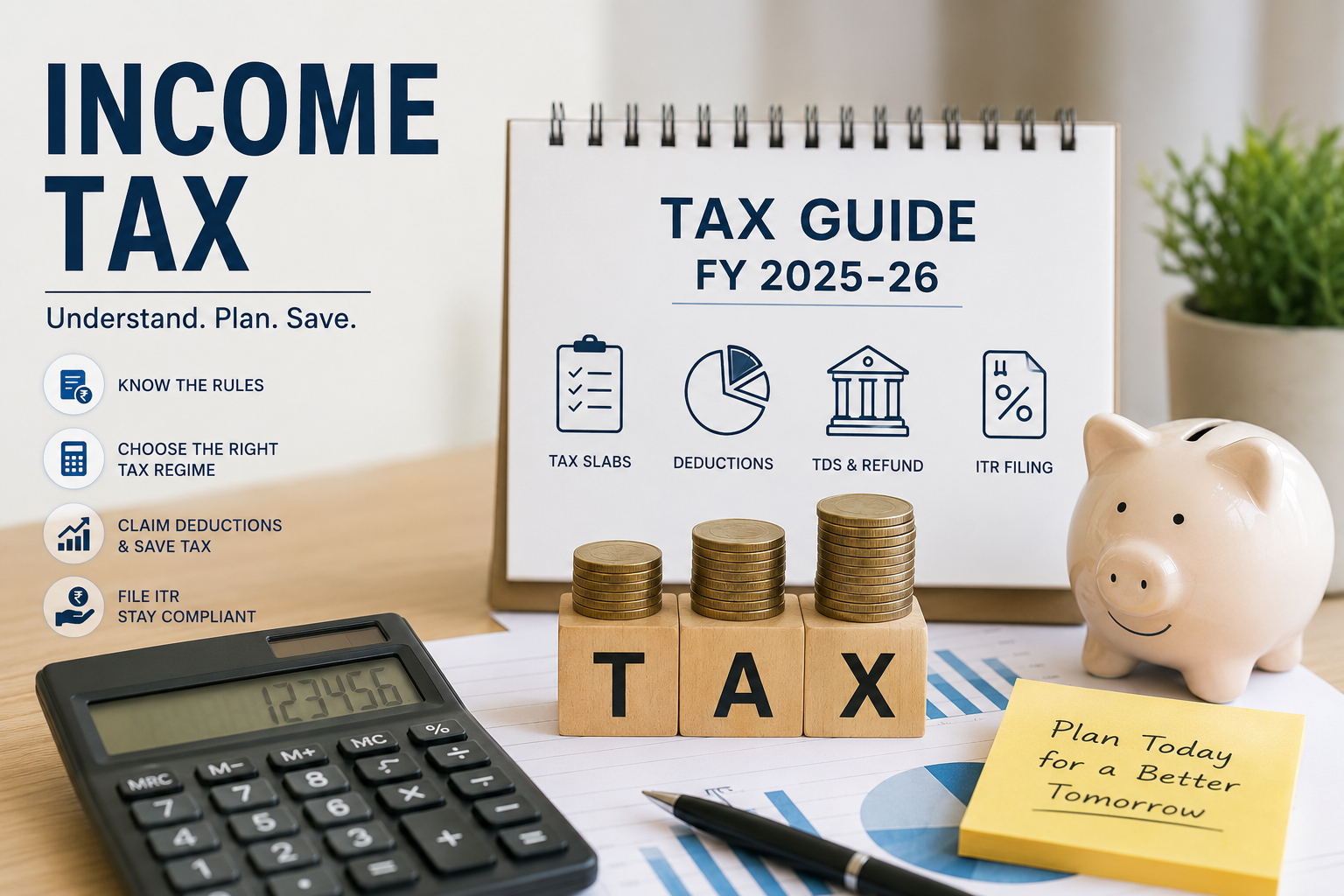
For many people, income tax feels like a yearly ambush.
One day you’re celebrating a salary hike, and the next day someone in payroll casually mentions “higher tax liability.” Suddenly, words like regime, rebate, TDS, and capital gains start appearing everywhere — often explained in ways that sound more intimidating than helpful.
But income tax isn’t just about deductions and deadlines. It quietly shapes the way people save, invest, buy homes, build businesses, and even plan retirement. Once you understand how the system actually works, taxation stops feeling like punishment and starts becoming something you can manage intelligently.
Here’s a clearer, modern breakdown of how income tax works in India for FY 2025–26 — without the jargon overload.
Why Governments Tax Income in the First Place
Income tax is essentially the government’s share in the income generated within the economy. The money collected is used for infrastructure, healthcare, public services, defence, welfare programs, and administration.
Unlike GST, which is paid while buying products or services, income tax is a direct tax. That means the person earning the income pays it directly to the government.
India follows a progressive taxation system, which means higher earners pay tax at higher rates. Someone earning ₹5 lakh and someone earning ₹50 lakh are not taxed equally — and that’s intentional.
Who Has to Pay Income Tax?
A common misconception is that only salaried employees pay taxes. In reality, income tax applies to almost every type of income earner.
Taxpayers can include:
- Salaried individuals
- Freelancers and consultants
- Business owners
- Companies
- Hindu Undivided Families (HUFs)
- Partnership firms
- Trusts and associations
The law refers to every taxable entity as an assessee.
What changes between categories is not whether tax applies — but how it is calculated.
The Big Shift: The New Tax Regime Is Now the Default
India’s tax structure has gradually moved toward a simplified model.
For FY 2025–26, the new tax regime continues as the default system for individuals and HUFs. The government’s idea is simple:
Lower tax rates in exchange for fewer exemptions and deductions.
Under this system, many taxpayers with income up to ₹12 lakh may effectively pay little or no tax after rebates.
The slab structure under the new regime is:
| Income Range | Tax Rate |
|---|---|
| Up to ₹4 lakh | Nil |
| ₹4 lakh – ₹8 lakh | 5% |
| ₹8 lakh – ₹12 lakh | 10% |
| ₹12 lakh – ₹16 lakh | 15% |
| ₹16 lakh – ₹20 lakh | 20% |
| ₹20 lakh – ₹24 lakh | 25% |
| Above ₹24 lakh | 30% |
This structure is designed to reduce complexity for people who don’t heavily depend on deductions.
The Old Regime Still Exists — And Sometimes It Wins
The old tax regime hasn’t disappeared.
It still allows taxpayers to claim benefits through popular deductions like:
- Section 80C investments
- Health insurance premiums
- Home loan interest
- Education loan interest
- NPS contributions
For people with significant investments, insurance, or housing loans, the old regime can sometimes produce a lower tax bill despite higher slab rates.
Choosing between the two regimes is less about “new vs old” and more about lifestyle.
A young professional with minimal investments may prefer simplicity.
A family with home loans, insurance, tuition fees, and retirement investments may still benefit from the old structure.
One of the Most Misunderstood Things About Tax Slabs
People often assume crossing into a higher slab means their entire income gets taxed at the higher rate.
That’s not how it works.
Only the portion that crosses into the next slab gets taxed at the higher percentage.
Think of tax slabs like water filling different containers step by step.
For example:
- The first part of your income may be tax-free
- The next portion may be taxed at 5%
- Another portion at 10%
- And so on
So earning slightly more money never results in a lower take-home income because of taxes.
That fear is one of the most persistent myths in personal finance.
Not Every Type of Income Is Taxed the Same Way
Salary income follows slab rates. But several other types of income follow special rules.
Capital Gains
If you sell shares, mutual funds, property, or other assets at a profit, the gains may be taxed separately.
The tax rate depends on:
- The type of asset
- How long you held it
In many cases:
- Long-term gains receive lower tax rates
- Short-term gains are taxed more aggressively
This distinction encourages long-term investing over short-term speculation.
Deductions: The Government’s Way of Rewarding Financial Discipline
Deductions are not “loopholes.” They are incentives.
The government uses them to encourage behaviors considered economically useful — such as saving, investing, buying insurance, or contributing to retirement funds.
Some widely used deductions include:
Section 80C
Covers investments like:
- PPF
- ELSS
- Life insurance
- EPF
- Tuition fees
Maximum deduction: ₹1.5 lakh
NPS Benefits
Additional deductions are available for National Pension System contributions.
Section 80D
Health insurance premiums for self and family.
Home Loan Interest
Available under Section 24.
Education Loan Interest
Interest paid on higher education loans may qualify for deduction.
The important thing to remember is this:
Tax planning works best when it supports financial goals — not when investments are made purely to save tax.
The Quiet Role of TDS in Everyday Life
Many people pay taxes without even noticing it.
That’s because of Tax Deducted at Source (TDS).
Employers deduct tax from salaries before crediting them. Banks may deduct tax on interest income. Certain payments to freelancers and contractors may also involve TDS.
In simple terms:
The government collects tax gradually throughout the year instead of waiting until year-end.
If excess tax is deducted, the taxpayer can later claim a refund while filing the Income Tax Return (ITR).
Filing an ITR Is More Important Than Most People Realize
A surprising number of people think income tax filing matters only when taxes are due.
But filing an ITR has become a broader financial identity tool.
It can help when applying for:
- Home loans
- Credit cards
- Business loans
- Visas
- Government tenders
Even individuals with low or nil tax liability often benefit from maintaining a proper filing history.
Common Documents Needed for Filing
Most taxpayers generally need:
- Form 16
- PAN details
- Form 26AS
- AIS/TIS statements
- Investment proofs
- Bank details
- Interest certificates
For freelancers or business owners, bookkeeping becomes equally important because taxable income depends heavily on recorded expenses and receipts.
Have Questions? We're Here to Help
Get expert advice from PSPG & Co LLP. Reach out to discuss your requirements.